
About the Book
Home » About the Book
The Setting
Provincetown is one place with two lives, morphing itself depending on the time of year.
In the summer, no place is more alive. The gay bars, spilling color and glitter onto the tourist-clotted streets. Artists painting in front yards and down at the shore. The smells of saltwater taffy and fried clams. In the winter the excitement dies down, except for the year-rounders, the writers, and a few barnacled souls drinking away the brooding, cold days.
Located at the very tip of Cape Cod, this historical seaside community has long attracted artists, dreamers, outsiders, and those seeking reinvention. Its rich cultural history, dramatic coastline, and close-knit community provide the perfect backdrop for a story where memory, belonging, and long-buried secrets collide.
Throughout the novel The Time It Takes to Drown, Provincetown is more than a setting. It becomes a force that shapes the characters, deepens the mystery, and reminds readers that the past is never so far out at sea that it won’t return again with the tide.
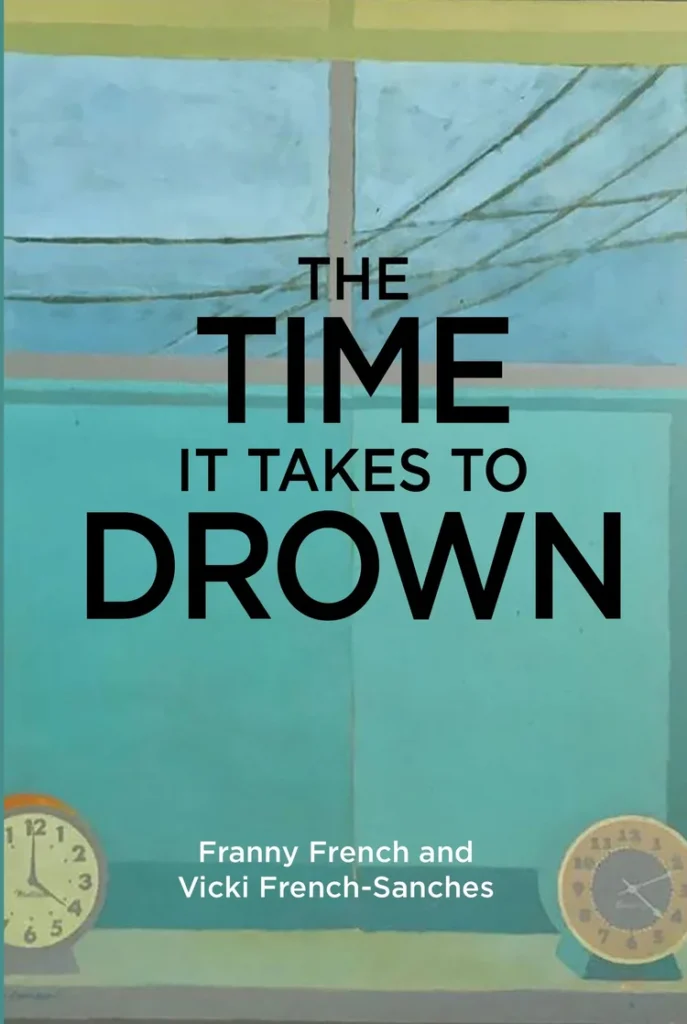
Publication date: 27/08/2026
ISBN: 978-1-83671-276-3
Imprint: Vanguard Press / Pegasus
Pages: 334
The Story
Sisters Pia and Jenn Cutter are thrust back into the chaos of their often turbulent childhood by the death of their father, a renowned Cape Cod artist and lifelong drinker old enough to be their grandfather.
While the famous around them made creative history, Pia and Jenn spent their childhood summers in Provincetown in blissful ignorance of adult matters. Instead, they focused on doing whatever kid stuff they wanted under the blazing sun, in the cooling sea, and amid colorful shelves of penny candy.
But now as adults, out of nowhere, town locals begin attempting to erase them from their father’s life and their shared history. Someone then steals their father’s corpse, and a mysterious stranger surfaces, claiming to be the real and only daughter of the old artist. Who the hell’s this “daughter”? The sisters feel on the edge of an ancient cliff, facing an impossible choice: Do they protect themselves from the old craziness, or drop anchor and fight?
Pia and Jenn have no idea how deeply twisted are the crimes against them.
Excerpt
It’s a bit murky now, like trying to pull back pieces of a dream. It began many years ago, this fear I have of the ocean. It’s irrational or rational, depending on whether or not one trusts the wildness of nature.
My mother, Judy, did not have this fear of the ocean. She would wade in, ankle-deep, knee-deep, then up to her thighs, with her fingertips tracing the water beside her for a few moments as she walked. She’d raise her arms above her head, and then dive under, and emerge swimming straight out in a very determined line. She’d go so far out that I couldn’t see her, and I’d get very scared that she was never coming back. It felt like she was trying to escape me, to escape Jenn and me.
One time, when I was four, and Judy was swimming out from Provincetown, I could see lightning in the distance. I was sure she must have seen it too. “Mommy! Come back!” I yelled, but neither the lightning nor her child held any sway with her. It didn’t matter how loud I cried or yelled—my voice was lost in the laughter of the wind and the waves. I went in up to my ankles, then to my knees to get to her, but as each wave receded, the water threw itself hard against the back of my legs, propelling me outward to the deeper water, while at the same time, the sand beneath my feet slipped away and sucked me down like a flushing toilet. I was paralyzed then—too afraid to go in to save Judy, and I knew for sure that she would not come back to save me if I fell under. I had no choice but to step myself out of the water.
I hated the water for being my mother’s accomplice, her getaway car. Because when Judy swam like that, she acted like she had no child on the shore.
I’ve tried to conquer my fear now, but when I do—when I go to the ocean and make it look like I’m enjoying it—if I make myself wade in up to my knees, and a sudden wave curves around and I’m in up to my thighs, my whole self wants out. I fear being paralyzed again, or worse: being overtaken by this wild, unpredictable beast.
I’d never again waded into the water without this fear, except for that day with the ashes.